
Bartering Station: Automating Piglin Trades
The 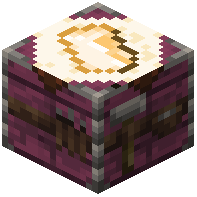 Bartering Station is a block that handles piglin bartering for you. Instead of dropping items in front of a piglin and picking up what it throws back, you place this block and let it run the exchange. The result is a repeatable trade setup that does not depend on you standing there.
What the Block Does
A piglin accepts  Gold Ingot as payment and returns a random item in exchange. Doing this by hand means tossing gold on the ground, waiting for the piglin to inspect it, and then chasing down whatever it drops. The Bartering Station takes over that process. You supply the gold, the station supplies it to a piglin, and the returned items are handled by the station rather than scattered across the floor. That makes the whole loop automatic instead of manual.
Crafting the Bartering Station
The Bartering Station has a single shaped recipe. You need:
- 2 Gold Ingot
- 4
 Oak Planks
Arrange the Gold Ingot and Oak Planks in the crafting grid according to the shaped pattern, and the Bartering Station is the output. Because the recipe is shaped, the positions of the ingredients matter — you cannot simply throw all six items into the grid in any order and expect the Bartering Station to appear.
The material cost is modest. Four Oak Planks come from a single log, and two Gold Ingot are easy to obtain once you have a gold source. For a block that removes the tedium of repeated piglin trades, that is a cheap entry price.
Why Automate Bartering
Manual bartering has several problems. Each trade requires you to be present. Each trade produces a random result, so you cannot predict what you will get. And each trade leaves items on the ground where they can despawn or be lost. Running trades through a Bartering Station addresses the first and third problems directly: the station keeps the process going without your attention, and the output does not end up strewn around the area.
This matters most when you want a large quantity of the items piglins give out. Rather than repeating the same throw-and-collect motion dozens of times, you feed Gold Ingot into the station and let it work. The Bartering Station turns a slow, hands-on chore into a background task.
Setting It Up
Place the Bartering Station where a piglin can reach it. Keep Gold Ingot available for the station to use as payment. Once the station has gold and access to a piglin, it can carry out trades on its own.
Plan your gold supply before you build. Every trade consumes Gold Ingot, so a station without a steady input of gold will stall. If you are mining gold or producing it another way, route that supply to the Bartering Station so the trades continue without interruption.
Practical Notes
- The recipe is shaped, so keep the Gold Ingot and Oak Planks in their correct grid positions.
- Two Gold Ingot and four Oak Planks produce one Bartering Station.
- Each trade uses Gold Ingot as the payment a piglin expects.
- Results from bartering are random, so the Bartering Station is best treated as a way to generate many rolls rather than a way to target one specific item.
The Bartering Station exists to solve one narrow problem: piglin bartering is repetitive, and doing it by hand wastes time. With a small amount of Gold Ingot and Oak Planks, you get a block that runs those trades for you. Build one, keep it stocked with Gold Ingot, and let the piglins do the rest.