
Botania Terrasteel Guide: Mana Infusion and the Terrestrial Agglomeration Plate
Terrasteel is a magical alloy that demands a serious investment of Mana, and producing it means building the 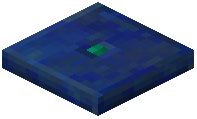 Terrestrial Agglomeration Plate and feeding it the right materials. This guide covers the full chain, from setting up the plate to completing the infusion.
Building the Terrestrial Agglomeration Plate
The plate cannot simply be placed anywhere. It must sit on top of a checkerboard pattern made from Lapis Lazuli Blocks and  Livingrock, or
  Shimmerrock as an alternative. Once that foundation is in place, the plate is ready to receive Mana.
Supplying Mana to the Plate
The plate needs a steady supply of Mana before any infusion can happen.  Sparks are the most efficient way to transfer that Mana into the plate. Any method works, but Sparks get the job done best.
Starting the Infusion
With the plate set up and Mana flowing, toss one  Manasteel Ingot, one
  Mana Diamond, and one
  Mana Pearl onto the plate. That combination begins the infusion process.
What Not to Do
Do not pick up any of the items once the infusion has started. Grabbing any of them halts the process and causes severe Mana Loss — every bit of Mana that was transferred to the plate is gone. Let the items sit until the craft finishes.
Mana Cost and Speed
A single piece of Terrasteel consumes roughly half a Mana Pool's worth of Mana. If you want the process to go faster, arrange for multiple Sparks to pass Mana to the plate at the same time. More Sparks means quicker infusion.
The Recipe
The Terrestrial Agglomeration Plate has one recipe:
 Terrasteel Ingot
Where Mana Infusion Fits In
Mana Infusion is the broader crafting system that turns ordinary materials into magical ones, and it has 139 recipes in total. Several of them feed directly into the Terrasteel chain. For example, a  Block of Iron infuses into a
  Block of Manasteel, and a
  Block of Diamond infuses into a
  Block of Mana Diamond. Those transformed materials are what you eventually toss onto the Agglomeration Plate.
Other Mana Infusion recipes show the range of what the system can do. Leaves can be duplicated, such as  Acacia Leaves becoming two Acacia Leaves, or
  Birch Leaves becoming two Birch Leaves. Logs and saplings can be converted between types — a
  Jungle Log becomes an
  Acacia Log, a
  Spruce Log becomes a
  Birch Log, a
  Jungle Sapling becomes an
  Acacia Sapling, and a
  Spruce Sapling becomes a
  Birch Sapling. Flowers shift as well: a
  Poppy becomes a
  Blue Orchid, a Blue Orchid becomes an
  Allium, and an Allium becomes an
  Azure Bluet. Stone and
  Granite both infuse into
  Andesite. A
  Cookie infuses into a
  Biscuit of Totality, a
  Slimeball into a
  Cactus,
  Glow Berries into an
  Apple, a
  Carrot into
  Beetroot Seeds, and a
  Dead Bush into
  Boreal Seeds. A
  Block of Blaze Quartz breaks down into four
  Blaze Quartz, and
  Bricks become four
  Brick items. Functional flora can also be reduced to petite forms, including
  Agricarnation,
  Bellethorne, and
  Bubbell.
Runes and the Runic Altar
Runes are core components for advanced magical devices and flora, and they are produced on a 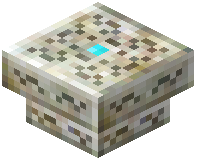 Runic Altar. To use the altar, place the recipe's components on it by right-clicking or tossing them. Then point a well-supplied
  Mana Spreader toward the altar so it keeps feeding power in. Your wand shows the transfer progress. Once the altar has received enough Mana, drop or right-click a piece of Livingrock onto it, then use the wand to collect the finished rune.
There are 16 Runes in total. The simplest are named after the Four Elements, the middle tier after the Four Seasons, and the most advanced after the Seven Deadly Sins. A separate  Rune of Mana sits outside that progression.
Several Runic Altar recipes illustrate the tiers:
 Mana Powder + Manasteel Ingot +
  White Carpet +
  Feather +
  String ->
  Rune of Air x2
- Mana Powder + Manasteel Ingot +
 Stone +
  Block of Coal +
  Brown Mushroom ->
  Rune of Earth x2
 - Mana Powder + Manasteel Ingot +
 Nether Brick +
  Gunpowder +
  Nether Wart ->
  Rune of Fire x2
 - Mana Powder + Manasteel Ingot +
 Bone Meal +
  Sugar Cane +
  Fishing Rod ->
  Rune of Water x2
 - Manasteel Ingot x5 + Mana Pearl -> Rune of Mana
- Rune of Fire + Rune of Air +
 Jungle Leaves x3 +
  Spider Eye ->
  Rune of Autumn
 - Rune of Water + Rune of Fire +
 Oak Sapling x3 +
  Wheat ->
  Rune of Spring
 - Rune of Earth + Rune of Air + sand x2 + Slimeball +
 Melon Slice ->
  Rune of Summer
 - Mana Diamond x2 +
 Rune of Winter + Rune of Water ->
  Rune of Envy
 - Mana Diamond x2 + Rune of Winter + Rune of Fire ->
 Rune of Gluttony
 - Mana Diamond x2 + Rune of Spring + Rune of Water ->
 Rune of Greed
 - Mana Diamond x2 + Rune of Summer + Rune of Air ->
 Rune of Lust
 - Mana Diamond x2 + Rune of Summer + Rune of Fire ->
 Rune of Pride
 - Mana Diamond x2 + Rune of Autumn + Rune of Air ->
 Rune of Sloth
Runes used as ingredients in other Runic Altar recipes act as catalysts, and they come back when the recipe finishes. Right-clicking the altar with an empty hand while it is not accepting Mana pulls out the last item you put in. An attached Comparator emits signal strength 1 while the altar is accepting Mana and signal strength 2 when it is ready to craft. After a recipe completes, right-clicking the altar with an empty hand pulls out another set of the items used for that recipe, which helps when crafting in bulk.
Covers the mod’s in-game guide topics: Terrasteel Terrestrial Agglomeration Plate Mana Infusion botania.entry.runeAltar Runic Altar Runic Altar Head