
Chipped Workbenches and Tools
Chipped's workbenches unlock its thousands of variants, and each also crafts a small tool. This guide covers building the stations and what they make.
Building the workbenches
The stations are crafted from a  Crafting Table with themed materials — for example the
 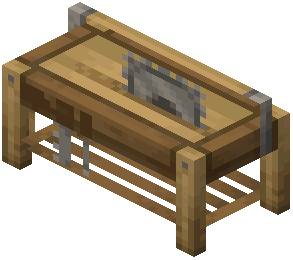 Carpenters Table from an iron ingot, dark oak logs, a crafting table, a wooden axe and a plank mosaic, the
 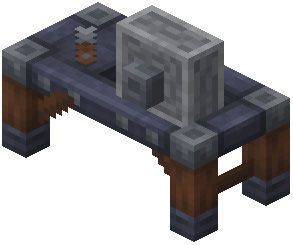 Mason Table from a brick, iron, a crafting table, dark oak logs and a clay ball, and the
 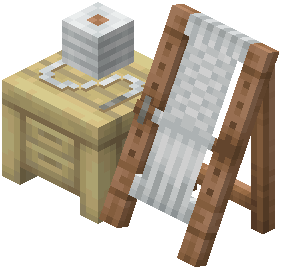 Loom Table from sticks, dark oak logs, a crafting table and wool. The
 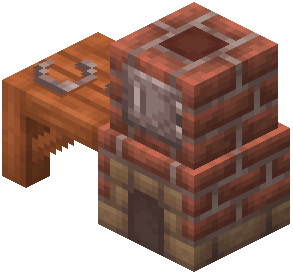 Glassblower and
 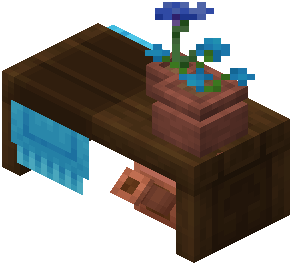 Botanist Workbench follow the same idea for glass and plant blocks.
Workbench tools
Combining a workbench with a component yields a handy tool:
- Mason Table +
 Iron Ingot — a
  Chisel.
 - Carpenters Table + Iron Ingot — a
 Saw.
Saw. - Loom Table +
 Stick —
  Needles.
 - Botanist Workbench +
 Bucket — a
  Watering Can.
 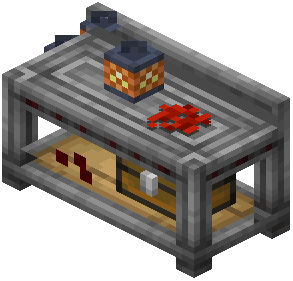 Tinkering Table +
  Redstone Dust — a
  Multimeter.
Using them
Each tool is a convenience for its material family, but the real value is the workbench itself: with all six built, nearly every vanilla-style block in the game gains dozens of chiseled, patterned and textured variants for your builds.
The benches are the entire interface
Chipped registers 6,967 blocks and only 6 items, and its complete recipe list is 13 crafting recipes plus a Workbench category holding 8 on 1.21.1. Everything else — every one of those thousands of variants — comes out of a workbench rather than a recipe.
That is why the mod has no progression: once a bench is placed, its full catalogue for that material is available.
A version difference in how they are registered
The Workbench category carries 8 recipes on 1.21.1 and none on 1.20.1. Crafting is 6 against 7. The benches themselves work on both builds; the difference shows up in what a recipe viewer can display.
One bench per material family
Each workbench covers a family of base materials, so the bench you place determines which section of the catalogue you can reach. Placing several in one room is the normal approach rather than choosing between them.
Practical advice
Carry the base block to the bench rather than the reverse. With 6,967 possible outputs, deciding at the bench with the material in hand is far faster than planning from a list.