
Diesel Engines and Turbocharger Upgrades in Create Diesel Generators
Diesel Engines in Create Diesel Generators convert liquid fuels into tremendous rotational force and high-speed stress units for factory automation. Constructing modular engine blocks allows mechanical engineers to scale rotational capacity to drive massive industrial contraptions from a compact footprint.
Forging Engine Pistons and Base Engine Blocks
Every mechanical combustion engine requires precision kinetic pistons capable of translating internal combustion pressures into rotational torque:
- Engine Piston: Craft two pistons on a crafting table by placing one Andesite Alloy in the top left slot, one Shaft or Iron Rod in the center slot, and one Zinc Nugget in the bottom right slot.
- Single Diesel Engine: Assemble a compact baseline engine unit using one Flint and Steel at the top center, two Engine Pistons flanking a solid Brass Storage Block in the middle row, and two Polished Blackstone Slabs flanking a Fluid Tank across the bottom row.
- Fueling Operations: Supply combustible fluids such as Diesel, Biodiesel, or refined petroleum via fluid pipes directly into the engine intake port. The internal combustion cycle immediately rotates output shafts at steady rotational speeds.
Expanding Modular Diesel Engines
Large-scale factory complexes demanding thousands of stress units can gang multiple combustion cylinders into combined engine blocks:
- Modular Diesel Engine Block: Craft modular expansion units by positioning one Andesite Alloy at the top center, two Brass Plates flanking a standard Diesel Engine across the middle row, and one Polished Blackstone Slab at the bottom center.
- In-Line Installation: Align modular diesel engine blocks contiguously in a straight line along a shared drive axis. The interconnected cylinders synchronize their strokes, combining stress capacity into a unified rotational network without additional gearboxes.
- Fluid Distribution: Shared internal manifolds allow fuel pumped into any single cylinder module to feed adjacent joined engines automatically.
Upgrading Huge Diesel Engines
Heavy maritime and train propulsion systems utilize reinforced heavy-duty engine housings:
- Huge Diesel Engine: Construct heavy-duty industrial prime movers using two Andesite Alloys, one Flint and Steel, two Brass Plates, one Steam Engine, two Fluid Pipes, and one Brass Storage Block.
- In the crafting grid, place two Andesite Alloys flanking the Flint and Steel across the top row, two Brass Plates flanking the Steam Engine across the middle row, and two Fluid Pipes flanking the Brass Storage Block along the bottom row.
- Huge Diesel Engines operate with immense torque ceilings, accepting high-pressure fuel injection to generate maximum rotational stress capacity.
Installing Silencers and Engine Turbochargers
Operating combustion engines produce loud mechanical exhaust noise and fixed speed outputs that players can optimize using external upgrades:
- Engine Silencer: Muffles repetitive combustion acoustics. Craft the silencer by arranging two Iron Plates at the top left and bottom right corners, four pieces of Wool in cross positions, one Andesite Alloy at the top right, and one Fluid Pipe in the center. Right-click the completed silencer directly onto any active Diesel Engine to silence exhaust noise.
- Engine Turbocharger: Boosts operational rotation speeds. Craft the unit by combining three Andesite Alloys, two Zinc Ingots, one Fluid Pipe, two Iron Plates, and one Propeller. Right-clicking the turbocharger onto an engine forces pressurized air intake, significantly accelerating shaft rotational speed.
 Modular Diesel Engine
 Engine Turbocharger
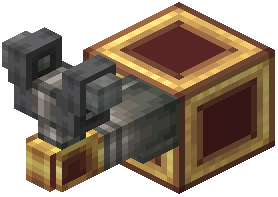 Huge Diesel Engine
 Engine Silencer
 Engine Piston
 Diesel Engine
 Biodiesel
 Diesel