
Voltage Tiers Transformers and Power Wiring Network Setup
Managing voltage tiers, transformer stations, and transmission wiring forms the critical foundation for powering machines safely in Electrodynamics. Power networks are categorized into three distinct voltage standards, and connecting a machine to an incompatible voltage will overload circuits or cause machines to underperform.
The Three Voltage Standards
Electrodynamics defines three primary voltage operating levels:
- Low Voltage (LV): Introductory voltage tier used by basic electric furnaces, small generators, and mineral crushers. Wired using
 Copper Wire and insulated copper wire.
- Medium Voltage (MV): Intermediate industrial tier used by electric arc furnaces, lathes, chemical mixers, and crystallizers. Wired using
 Gold Wire, insulated gold wire, and thick gold wire.
- High Voltage (HV): Advanced power tier used by large multi-block machinery, electrolysis chambers, and railguns. Wired using
 Superconductive Wire and thick superconductive wire.
Transformer Stations: Stepping Voltage Up and Down
Transformers alter voltage between tiers while conserving overall power, allowing power plants to transmit electricity across long distances at high voltage before stepping it down for local factory use:
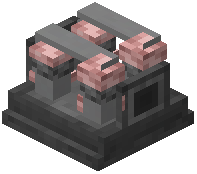 Upgrade Transformer: Steps voltage up from Low Voltage (LV) to Medium Voltage (MV). Crafted using two
 Iron Ingot, four
 Steel Ingot, one
 Copper Coil, and one Copper Wire.
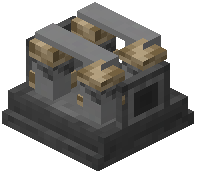 Downgrade Transformer: Steps voltage down from Medium Voltage (MV) to Low Voltage (LV). Crafted using three Iron Ingot, three Steel Ingot, one Copper Wire, and one Copper Coil.
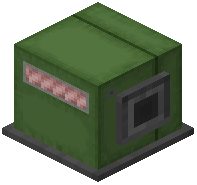 Upgrade Transformer Mk 2: Steps voltage up from Medium Voltage (MV) to High Voltage (HV). Crafted from four
 Stainless Steel Plate, two
 Laminated Copper Coil, one Upgrade Transformer, one
 Basic Circuit, and one Copper Wire.
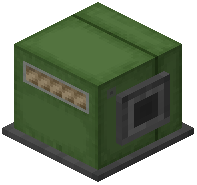 Downgrade Transformer Mk 2: Steps voltage down from High Voltage (HV) to Medium Voltage (MV). Crafted from five Stainless Steel Plate, two Laminated Copper Coil, one Downgrade Transformer, and one Basic Circuit.
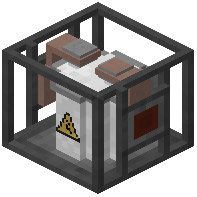 Current Regulator: Balances current across complex split-voltage junctions. Crafted from four
 Steel Plate, two
 Aluminum Plate, one Downgrade Transformer, one Basic Circuit, and one Upgrade Transformer.
Wire Manufacturing in the Wire Mill
Producing long cable runs requires processing ingots through the 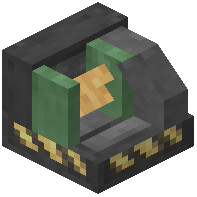 Wire Mill:
- Crafted from four Steel Plate, one Basic Circuit, two
 Motor, and two
 Bronze Gear.
- Consumes ingots to extrude raw uninsulated wires, including Copper Wire, Gold Wire,
 Silver Wire, and Superconductive Wire.
- Combining raw wire with wool, leather, or ceramic insulation on a crafting grid produces insulated wire variants that prevent accidental electrical shocks and energy loss.
Structuring your factory with high-voltage main arteries and local transformer step-down substations prevents catastrophic machine damage and ensures optimal energy distribution.
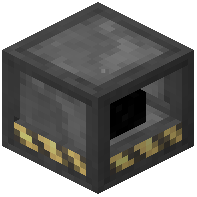 Electric Arc Furnace
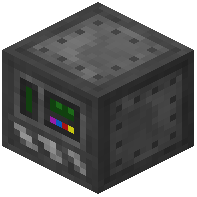 Electrolysis Chamber
 Ceramic Insulation
 Electric Furnace