
Blasting Quartz Blend into Refined Silicon in Extended AE
guide
Blasting in Extended AE is a high-temperature pyrometallurgical process that rapidly smelts quartz blend into refined silicon ingots for manufacturing advanced processor logic chips.
Thermal Smelting of Quartz Blend into Silicon
Transitioning from raw quartz crystals to refined semiconductor silicon requires high-temperature furnace processing:
- Mill nether quartz or certus quartz together with sand inside a mechanical grinder to prepare fine powdery
 Quartz Blend.
 - Construct a high-temperature blast furnace at a crafting table and load fuel such as coal, charcoal, or lava buckets.
- Deposit the powdered Quartz Blend into the upper smelting input chamber of the blast furnace.
- Under intense forced-air combustion, the blend melts rapidly, smelting down into pure refined wafers of
 Silicon.
 - Blasting operates at double the processing speed of standard stone furnaces, eliminating smelting bottlenecks in silicon production.
- Connecting item hoppers or ME export buses directly to the blast furnace input enables automated unattended batch smelting.
- Operating an array of paired blast furnaces ensures a continuous flow of refined silicon for large-scale circuit fabrication.
Inscribing Processors and Silicon Storage
Refined silicon serves as the indispensable semiconductor foundation for assembling high-tier ME computational circuits:
- Place refined Silicon into an Inscriber workstation equipped with an
 Inscriber Silicon Press.
 - The inscriber stamps the silicon wafer under intense mechanical pressure to manufacture a
 Printed Silicon substrate.
 - Combine the Printed Silicon with printed logic circuits, redstone dust, and an
 Entro Infused Ingot to assemble a
  Concurrent Processor.
 - For compact warehouse storage, combine nine individual pieces of refined silicon in a crafting grid to form a dense
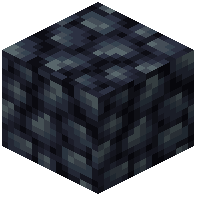 Block of Silicon.
 - Establishing an automated blast furnace array dedicated to silicon smelting guarantees an uninterrupted flow of logic processors for your expanding ME network.
- Storing silicon blocks in bulk reserves protects your industrial manufacturing lines against sudden quartz supply shortages.
- Synchronizing crushing wheel outputs with blast furnace hoppers establishes an efficient, continuous circuit fabrication pipeline.
- Compressed silicon blocks resist accidental environmental destruction, providing a secure mineral reserve for expanding computing networks.
- Establishing high-throughput silicon refining forms the foundation for mass-producing advanced computational processors across industrial complexes.