
Parquet Flooring, Wood Trims, and Shoji Screens
Parquet flooring and specialized timber trims add detailed carpentry options across every standard wood species.
Crafting Parquet Flooring
Parquet blocks introduce intricate geometric tile patterns for interior residential flooring. In a crafting table, stacking 2 matching wooden slabs vertically in a single column produces 1 parquet block. For example, placing 2 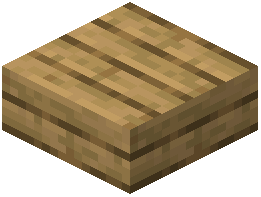 Oak Slab blocks vertically yields 1
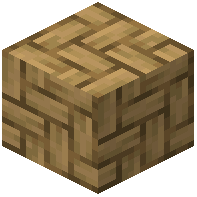 Oak Parquet.
Every lumber variety supports dedicated parquet crafting, providing diverse wood color tones:
- Oak Parquet: Crafted from 2 Oak Slab.
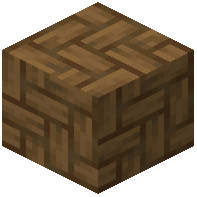 Spruce Parquet: Crafted from 2 spruce slabs.
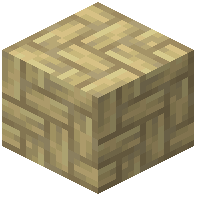 Birch Parquet: Crafted from 2 birch slabs.
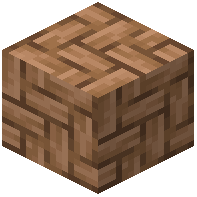 Jungle Parquet: Crafted from 2 jungle slabs.
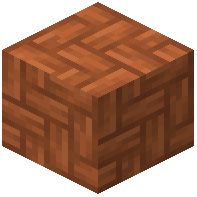 Acacia Parquet: Crafted from 2 acacia slabs.
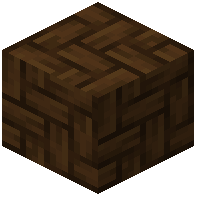 Dark Oak Parquet: Crafted from 2 dark oak slabs.
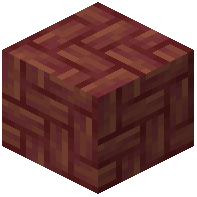 Mangrove Parquet: Crafted from 2 mangrove slabs.
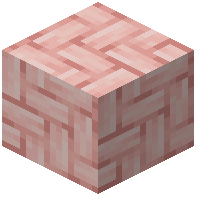 Cherry Parquet: Crafted from 2 cherry slabs.
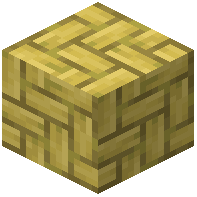 Bamboo Parquet: Crafted from 2 bamboo slabs.
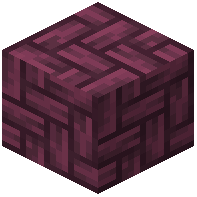 Crimson Parquet: Crafted from 2 crimson slabs.
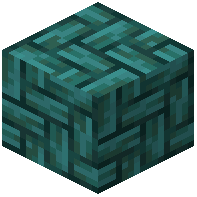 Warped Parquet: Crafted from 2 warped slabs.
Because parquet uses standard slab inputs, renovating plain plank floors into patterned parquet is straightforward and resource-efficient. Parquet tiles naturally alternate their grain orientation as they are laid out, forming cohesive herringbone and basketweave textures across large banquet halls.
Shoji Panels and Bamboo Mats
Shoji screens provide lightweight paper partitions suitable for interior dividers and decorative windows. Placing 2  Paper and 2
 Stick in an alternating two-by-two checkerboard pattern produces 4
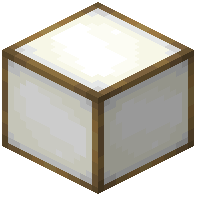 Shoji blocks.
To craft larger continuous wall partitions, arrange 6 Shoji blocks in two horizontal rows of 3 inside a crafting table. This yields 6  Shoji Panel units, which seamlessly connect to form floor-to-ceiling screens that diffuse light.
For floor coverings, bamboo can be woven into flexible floor mats:
- Arranging 4
 Bamboo in a two-by-two square produces 1
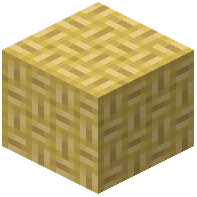 Woven Bamboo.
- Placing 2 Woven Bamboo side by side horizontally crafts 3
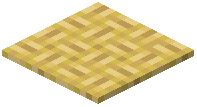 Bamboo Mat blocks.
Bamboo mats provide an earthy tatami texture that pairs effortlessly with shoji partitions in traditional pavilions and coastal retreats.
Timber Trim and Sanded Wood
Wall borders and crown moldings use dedicated trim blocks. In a crafting table, sandwiching 1 stripped log between 2 matching planks in a vertical column crafts 6 trim blocks. For instance, stacking 2 oak planks around 1 stripped oak log in a vertical column yields 6 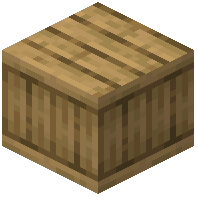 Oak Trim. Vertical trim aligns cleanly along window jambs, doorway edges, and supporting wall pillars.
Trim blocks support flexible placement adjustments:
- Placing 1 Oak Trim in any crafting slot converts it into 1
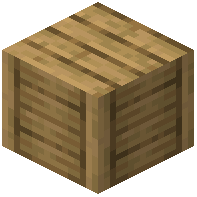 Oak Vertical Trim.
- Placing 1 Oak Vertical Trim back into a crafting grid transforms it back into 1 Oak Trim.
For polished surfaces without deep grain ridges, craft sanded wood. Combining 8 matching wood planks with 1 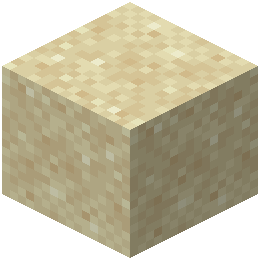 Sand in any crafting grid yields 8 sanded wood blocks, such as
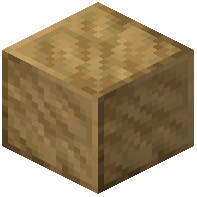 Oak Sanded Wood or
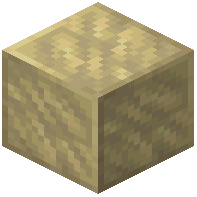 Birch Sanded Wood.
Wooden Lattices
Lattices provide open crisscross screens for garden trellises, verandas, and decorative window grates. Crafting a lattice requires a three-by-three grid combining 5 Stick and 4 matching planks:
- Top row: 1 Stick, 1 plank, 1 Stick.
- Middle row: 1 plank, 1 Stick, 1 plank.
- Bottom row: 1 Stick, 1 plank, 1 Stick.
This pattern produces 6 lattice blocks, including 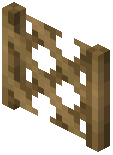 Oak Lattice,
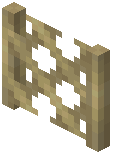 Birch Lattice, and
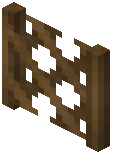 Spruce Lattice. Lattices allow natural sunlight and air to filter through while maintaining decorative enclosure boundaries.