
Converting Crushed Ore and Dusts into Ingots with the Bloomery, Blast Furnace, and Arc Furnace
Turning crushed ore and dusts into usable ingots is a core progression step in Immersive Geology. Several processing routes exist, and each one suits a different stage of your setup. The earliest option is cheap but wasteful, while later machines accept more refined inputs and return better results.
The Crude Bloomery
The Crude Bloomery processes crushed ores directly into ingots. To build one, you first need  refractory bricks, which come from heating fire clay inside a furnace. Those bricks form the structure of the bloomery, and the same material is later used for the Reverberation Furnace.
The bloomery is inexpensive to set up, but it is not very effective. It consumes more crushed ore than other methods, so you should move away from it once you have a better option available.
Metals that can be processed in the bloomery include:
 Copper Ingot
 Gold Ingot
 Iron Ingot
- Lead Ingot
- Silver Ingot
- Tin Ingot
- Zinc Ingot
The bloomery has nine recipes in total, covering these outputs.
Fuel for the Bloomery
The Bloomery Fuel category also contains nine recipes. Valid fuel inputs include:
- Anthracite, in both normal ore and storage block form
- Bituminous ore and its storage block
- Lignite ore and its storage block
 Charcoal
 Coal
Coal- Coal Coke
The Blast Furnace
The 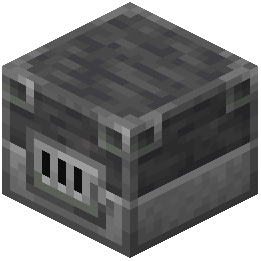 Blast Furnace is a much more capable machine, with 38 recipes. It accepts both crushed ores and pellets, and it can also handle oxide pellets.
For copper, the blast furnace turns Crushed Cuprite, Pellet Chalcocite, Oxide Pellet Copper, and Pellet Cuprite into Copper Ingot.
For gold, Crushed Gold becomes Gold Ingot.
Iron has the widest range of inputs: Crushed Hematite, Crushed Magnetite, Pellet Hematite, Oxide Pellet Iron, Pellet Magnetite, and Pellet Pyrite all produce Iron Ingot.
Other metals follow the same pattern:
- Oxide Pellet Chromium yields Chromium Ingot
- Oxide Pellet Cobalt yields Cobalt Ingot
- Crushed Galena, Crushed Lead, Pellet Galena, Oxide Pellet Lead, Crushed Vanadinite, and Pellet Vanadinite all yield Lead Ingot
- Crushed Pyrolusite, Oxide Pellet Manganese, and Pellet Pyrolusite yield Manganese Ingot
- Oxide Pellet Molybdenum yields Molybdenum Ingot
- Pellet Millerite yields Nickel Ingot
Fuel for the Blast Furnace
The Blast Furnace Fuel category has two recipes. The accepted inputs are Anthracite in normal ore form and Anthracite as a storage block.
The Arc Furnace
The Arc Furnace is the largest of the three, with 62 recipes. It works with crystals and dusts rather than crushed ore or pellets.
Examples of its copper and gold handling:
- Crystal Copper and Dust Copper both produce Copper Ingot
- Crystal Gold and Dust Gold both produce Gold Ingot
Iron behaves the same way: Crystal Iron and Dust Iron each produce Iron Ingot.
The arc furnace also handles some less common conversions. Sheetmetal Block Rusty Metal breaks down into six  Iron Nuggets, and Powder Chromite becomes Compound Dust Chromium.
Choosing a Route
Start with the Crude Bloomery if you only have crushed ore and fire clay on hand, but treat it as temporary. Once you can supply pellets or oxide pellets, the Blast Furnace gives you far more coverage across metals. When your production shifts toward crystals and dusts, the Arc Furnace takes over as the broadest option of the three.
Covers the mod’s in-game guide topics: Crude Bloomery Crude Bloomery Bloomery Fuel Blast Furnace Blast Furnace Fuel Arc Furnace