
Creating Life and Controlling Mobs in Pastel
Kindlings and Dragonbone
Deep underground, you may find massive skeletal remains that suggest ancient dragons. These bones are not ordinary; they carry a lingering magical aura that makes them impossible to mine directly. However, if you detonate an explosion near the 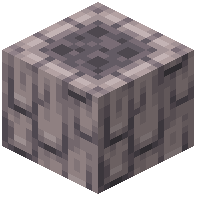 Dragonbone, the blast strips away that protective magic, leaving the blocks vulnerable. Once mined, you receive
  Dragonbone Chunks that still hold traces of that old power.
To process these chunks, you need a 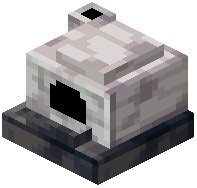 Cinderhearth, which produces enough heat to reduce the bones to ash. The Cinderhearth can also restore most blocks to a polished state. If you apply enough force, the bones can be crushed into an excellent fertilizer. The ash itself is a strange end product—what seems like a morbid cycle ends with nothing but dust.
With the Dragonbone Chunks, you can attempt to recreate a dragon. The result is a Kindling—a creature that is far less fearsome than you hoped. It is more like a large, soft companion than a predator. If you approach a Kindling quietly with  Shears, you can clip some of its downy feathers. Kindlings are not aggressive, and their gentle nature makes them more suited to a menagerie than a battle.
There is also a form of night alchemy that interacts with willpower. Since dragons are thought to be beings of pure will, combining this alchemy with a Kindling may produce an effect. If you try this, do it far from anything you value, because the outcome is unpredictable and could cause a long sleep or worse.
Memories
The 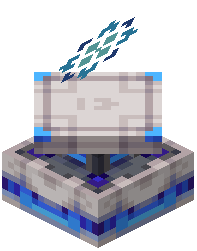 Spirit Instiller is a multiblock structure that lets you combine the energies of two items using a third as a binding agent. It requires an 8x9x5 space and a focus structure, which you can rotate by clicking on the Instiller. The structure includes one Spirit Instiller, two Item Bowls, two Notched Polished Blocks, two Chiseled Polished Blocks, two Onyx Chiseled Blocks, six Polished Pillars, and seventeen Polished Slabs. You can enhance it by placing Upgrades on the two Onyx Chiseled Blocks.
To resurrect a creature, you need its Head, an item that creature loved most in life, and  Vegetal as a bonding agent. Place these in the Instiller, and the creature will materialize as a
  Memory—an ethereal form that must be placed on the ground to manifest over time. The process works like an egg: you wait, and depending on the creature, it may be quick or take a long while. Certain blocks can speed up manifestation, while others may halt it entirely.
If you use  Neolith instead of Vegetal, the creature’s energies become overwhelmed, and the resulting Memory will be unrecognizable until it fully manifests. With enough knowledge, you can even bring back powerful beings like Ender Dragons, Withers, or Wardens.
Spawner Manipulation
Using the Resonance enchantment, you can cause a Spawner to drop as an item. You cannot craft new Spawners, but you can alter the properties of ones you collect using the Spirit Instiller. These modifications let you:
- Increase the number of creatures spawned per cycle.
- Reduce both the minimum and maximum delay between spawns.
- Raise the cap on how many creatures can exist near the Spawner before it stops working.
- Extend the range at which the Spawner remains active even when you are far away.
Idols
Idols are block-shaped manifestations of a creature. When you step on them, walk across them, or strike them with a projectile, they trigger an effect linked to that creature. Each Idol behaves differently:
- Some grant a brief burst of Regeneration.
- Some emit an echolocation pulse that reveals creatures within an 8-block radius.
- Some fertilize adjacent plants.
- Some smelt ores or convert blocks like
 Netherrack into
 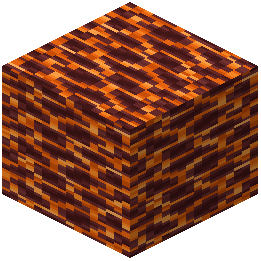 Magma Blocks.
 - Some set the triggering creature and nearby blocks on fire.
- Some negate all fall damage when you land on them, and also reset fall damage if you hit them.
- Some provide a short period of Slow Falling.
Covers the mod’s in-game guide topics: Kindlings Dragonbone Memories Spirit Instiller Spawner Manipulation Idols
 Ash
Ash