
Subterranean Salt Chemistry and Rock Salt Masonry
Subterranean salt deposits supply underground miners with vital chemical reagents, leather curing agents, and resilient crystalline building stones. Mining raw rock salt strata and extracting dissolved brine allows cave explorers to manufacture gunpowder without hunting creepers, tan leather from zombie flesh, and assemble illuminated salt lamps.
Extracting Salt and Refining Salt Buckets
Natural 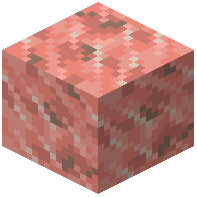 Rock Salt Block deposits generate throughout subterranean caverns, with each block dropping four raw
 Rock Salt mineral pieces when excavated. In addition, exploring abandoned mineshafts frequently yields chests containing between four and sixteen Rock Salt crystals.
Refining salt and fluid brine follows multiple physical and chemical methods:
- Smelting one
 Water Bucket in a furnace completely boils off the moisture, leaving one concentrated
 Salt Bucket.
- Placing eight
 Salt crystals surrounding an empty iron
 Bucket on a crafting table produces one Salt Bucket.
- Compacting nine Salt crystals crafts one solid
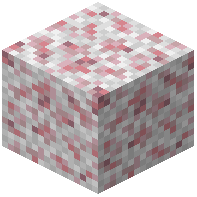 Block of Salt, which can be broken down back into nine loose crystals.
- Arranging four raw Rock Salt pieces in a two-by-two square crafts one solid Rock Salt Block.
- Mechanical crushing wheels pulverize one Rock Salt Block into two Rock Salt items, or crush one Rock Salt mineral into two fine Salt crystals.
- Mixing 144 millibuckets of water with one
 Pointed Dripstone in a mixing basin yields one Salt crystal, while mixing water with Salt precipitates one solid Rock Salt piece.
Curing Leather and Chemical Gunpowder Synthesis
Salt provides subterranean expeditions with a reliable source of leather without requiring surface cattle ranches:
- In modern versions, placing five Salt crystals and four
 Rotten Flesh pieces in a checkerboard pattern on a crafting table purifies the decayed tissue, yielding four clean
 Leather pieces.
- In earlier releases, surrounding one Rotten Flesh with four Salt crystals in a plus shape purifies the meat into one Leather.
 Saltpeter surfaces as a crystalline byproduct when washing or excavating clay, carrying a twelve and a half percent discovery rate.
- Combining one
 Charcoal, one Saltpeter, and one
 Sulfur on a crafting table synthesizes three
 Gunpowder, supplying steady explosive fuel without mob encounters.
- Compacting nine Saltpeter items crafts one
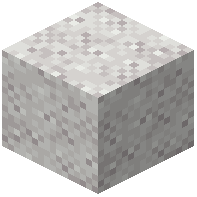 Block of Saltpeter for dense mineral storage.
- Combining one Saltpeter with one
 Glowstone Dust crafts two
 Bone Meal in modern editions, while blending Saltpeter with subterranean Phosphor Fungus yields three Bone Meal in earlier versions.
Illuminating with Salt Lamps and Carving Masonry
Raw rock salt crystals naturally diffuse internal light, making them exceptional raw materials for subterranean illumination:
- Crafting a
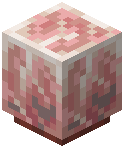 Salt Lamp requires stacking one Rock Salt crystal directly above one Glowstone Dust and one wooden slab on a crafting grid, creating a warm lantern block.
- Refined rock salt also provides extensive masonry options. Combining four Rock Salt Block units in a two-by-two grid crafts four
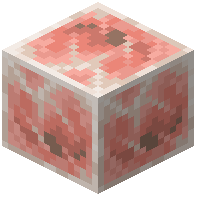 Polished Rock Salt blocks.
- Arranging four Polished Rock Salt blocks in a two-by-two grid crafts four textured
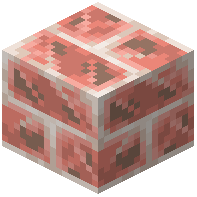 Rock Salt Bricks.
- Placing six matching rock salt blocks, polished blocks, or bricks in standard stair patterns crafts four stairs, while two rows of three blocks produce six decorative walls.
- Laying three matching blocks horizontally produces six structural slabs.
- Feeding Rock Salt Block pieces through a stonecutter directly carves polished variants, bricks, stairs, walls, and slabs with exact one-to-one efficiency.