
Synthesizing Dinosaur Eggs in the Cultivator in Unusual Prehistory
The 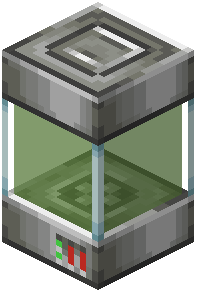 Cultivator synthesizes viable dinosaur eggs, prehistoric flora saplings, and embryonic tissues from isolated genetic flasks in Unusual Prehistory. Acting as an artificial bio-chamber, this machine incubates liquid DNA samples within a nutrient bath to revive long-extinct species back into physical reality.
Crafting the Cultivator and Organic Ooze
Building the Cultivator requires heavy structural casing and a living biological medium. In a crafting table, arrange three  Iron Ingot items across the top row, two
 Glass blocks flanking one
 Organic Ooze in the middle row, and two
 Copper Ingot pieces flanking a
 Block of Redstone along the bottom row.
Maintaining the bio-chamber requires a continuous supply of nutrient fuel. Fabricating Organic Ooze uses basic agricultural and foraging materials. Combining one  Bone, one
 Slimeball, and one
 Wheat in any shapeless crafting grid yields three containers of Organic Ooze.
Operating the Cultivator Chamber
The Cultivator interface divides into four functional sections engineered for continuous bio-synthesis.
- The primary intake slot (slot 0) holds the target specimen flask, such as a
 Triceratops DNA Flask or
 Tyrannosaurus Rex DNA Flask.
- The biological fuel compartment (slot 1) accepts Organic Ooze, supplying biochemical sustenance throughout the incubation process.
- The synthesis output bay (slot 2) holds the finalized biological product once the cycle completes.
- The flask reclamation slot (slot 3) safely catches the empty
 Flask, allowing players to reuse their glassware in the analyzer.
A full cultivation cycle requires dedicated time and continuous processing. The chamber consumes organic nutrient fluid steadily throughout the incubation period. If the ooze supply runs out before the cycle concludes, progress pauses immediately until refueled.
Cultivated Organism Categories
The biochemical processes inside the cultivator generate three major classes of ancient life:
- Reptilian and avian dinosaur eggs: DNA flasks from species such as Triceratops DNA Flask,
 Brachiosaurus DNA Flask,
 Velociraptor DNA Flask,
 Anurognathus DNA Flask, and
 Majungasaurus DNA Flask synthesize into tangible egg blocks including the
 Triceratops Egg and
 Brachiosaurus Egg. These eggs can be placed on terrestrial blocks or warm substrates to hatch naturally.
- Aquatic fauna and corals: Marine specimens including the
 Ammonite DNA Flask,
 Dunkleosteus DNA Flask, and coral strains produce water-viable eggs like the
 Ammonite Egg and living
 Anostylostroma Coral Block colonies.
- Ancient botanical specimens: Plant flasks convert into plantable saplings and seeds, including the
 Prehistoric Ginkgo Sapling,
 Foxii Sapling,
 Dryophyllum Sapling, and
 Archaefructus.
- Mammalian and serpentine embryos: Giant terrestrial mammals do not lay eggs. Synthesizing flasks such as the
 Mammoth DNA Flask,
 Smilodon DNA Flask, and
 Megatherium DNA Flask yields sealed embryonic containers requiring specialized post-cultivation birthing pods.