
Crude and Improved Blast Furnaces for Making Steel in Immersive Engineering
Steel production in Immersive Engineering begins with the Crude Blast Furnace and scales up with the Improved Blast Furnace. Both structures raise the carbon content of iron until it becomes Steel, but they differ sharply in how much work you must do yourself.
The Crude Blast Furnace
This is the entry point for steel. It converts iron into Steel, and it accepts only pure, high-carbon fuels —  Coal Coke and
  Charcoal are the valid choices. Burning anything else will not drive the process.
The furnace also produces  Slag alongside every batch of steel. Slag must be cleared out regularly; if it piles up, the furnace stops working entirely. Although it counts as a waste product, it is not useless — it can be recycled through routes such as brick construction or concrete.
Building one requires 27 furnace bricks placed as a 3x3x3 cube. Once the cube is assembled, strike the center block of any side with an  Engineer's Hammer to complete the multiblock.
The Crude Blast Furnace cannot be automated. Every input and output has to be handled by hand through its interface.
Its recipes are limited. A Block of Iron becomes a  Block of Steel, and an
  Iron Ingot becomes a
  Steel Ingot.
The Improved Blast Furnace
The Improved Blast Furnace is the more professional route to steel. It supports automated input and output, and it can be fitted with preheaters that shorten the refinement time by feeding hot air into the process.
It is constructed from reinforced bricks, making it a solid first steel setup for a new engineer. The shape follows the same pattern as the crude version, but the bricks are reinforced and a hopper sits on top to funnel materials in.
Iron and Coal Coke enter through the top. Steel leaves from the front, while Slag exits at the back. The furnace pushes its output automatically into connected inventories or onto conveyor belts, so no manual collection is needed.
The side ports accept heated air. Blast Furnace Preheaters warm air and blow it into the furnace, which accelerates iron refinement. A single furnace supports two preheaters on each side, and every preheater draws Flux per tick to run.
What the Blasting Category Covers
The blasting process handles far more than steel. It has 39 recipes in total. Ore and raw material conversions include  Bauxite Ore,
  Deepslate Bauxite Ore, and
  Raw Bauxite all yielding
  Aluminium Ingot, plus
  Lead Ore,
  Deepslate Lead Ore,
  Raw Lead,
  Nickel Ore,
  Deepslate Nickel Ore,
  Raw Nickel,
  Silver Ore,
 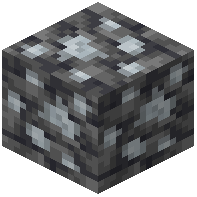 Deepslate Silver Ore, and
  Raw Silver producing their respective ingots.
Grit also blasts down into ingots:  Aluminium Grit,
  Constantan Grit,
  Copper Grit,
  Electrum Grit,
  Gold Grit,
  Iron Grit,
  Lead Grit, and
  Nickel Grit each become their matching ingot.
Worn Faraday armor can be recycled this way too —  Faraday Boots,
  Faraday Chestplate, and
  Faraday Helmet each return
  Aluminium Nugget.
Fuel Recipes
Fuel preparation has four recipes. Charcoal, a Block of Charcoal, Coal Coke, and a 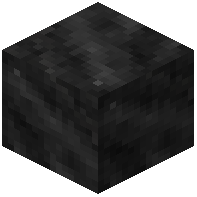 Block of Coal Coke are each processed through this category.
Choosing Between Them
Start crude if you only need a small amount of steel and do not mind feeding it by hand. Move to the Improved Blast Furnace once you want steady, automated steel, and add preheaters when you are ready to spend Flux for faster batches.
Covers the mod’s in-game guide topics: Crude Blast Furnace Improved Blast Furnace Crude Blast Furnace Blasting Blast Furnace Fuel