
Garden Cloche Crops, Soils, and Fertilizer Timings
The Garden Cloche grows a single crop automatically for 8 Flux per tick, and the only two things it demands beyond power are the correct soil block and a water supply. Get the soil wrong and it simply sits there, which is the reason most cloche problems are actually soil problems.
Building one
On 1.21.1 the recipe is four glass blocks around the frame, an  Incandescent Light Bulb on the top centre, an
  Iron Mechanical Component in the middle and a
  Basic Engineering Block underneath. On 1.20.1 the same four glass and light bulb sit above an Iron Mechanical Component flanked by two
  Treated Wood Planks.
The block itself is two high, with seven inventory slots: soil, seed and fertilizer as inputs, and four output slots. It holds 4,000 mB of water and buffers 16,000 Flux.
Soil is not optional
Each crop names one specific soil block, and the cloche accepts nothing else. Most of the list wants plain  Dirt, but the exceptions are where people get stuck:
 Coarse Dirt for
  Fern and
  Short Grass
 Sand for
  Cactus and
  Sugar Cane
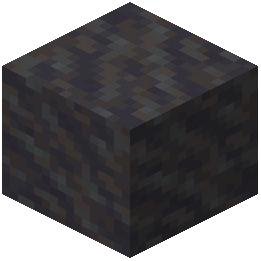 Mud for
  Blue Orchid
- Mycelium or Podzol for
 Brown Mushroom and
  Red Mushroom
  Moss Block for
  Glow Berries
 Cobblestone for Moss Block
- End Stone for
 Chorus Flower
 - Soul Sand for
 Nether Wart, and Soul Soil for
  Wither Rose
 - Crimson Nylium for
 Crimson Fungus, Warped Nylium for
  Warped Fungus
One soil block sits in the slot permanently and is not consumed, so the cost is a single block per cloche.
Growth times
Every crop has a base growth time, and they fall into five bands. Shorter is faster:
- 480 ticks - the flowers and the fast decoratives:
 Allium,
  Azure Bluet, Blue Orchid,
  Cornflower,
  Dandelion,
  Lilac,
  Lily of the Valley,
  Orange Tulip,
  Oxeye Daisy,
  Peony,
  Pink Tulip,
  Poppy,
  Red Tulip,
  Rose Bush,
  Sunflower,
  White Tulip, Wither Rose, Fern, Short Grass, Brown Mushroom, Red Mushroom,
  Chorus Fruit
 - 560 ticks -
 Bamboo, Cactus, Sugar Cane,
  Sweet Berries, Crimson Fungus, Warped Fungus
 - 640 ticks -
 Wheat, Glow Berries
 - 800 ticks - the staples:
 Beetroot,
  Carrot,
  Potato,
  Melon,
  Pumpkin, Nether Wart, and
  Industrial Hemp Fiber
 - 1,200 ticks - the slow ones: Moss Block,
 Pitcher Plant,
  Torchflower
Yields differ too. Beetroot, Carrot, Potato, Wheat, Nether Wart and Sweet Berries each return two per harvest, while flowers and fungi return one.
Fertilizer and what it is worth
The fertilizer slot takes one item at a time and each dose lasts 6,000 ticks while consuming 250 mB of water. Five materials qualify, and the multiplier they apply to growth speed varies widely:
 Industrial Fertilizer - 1.6x
 Bone Meal - 1.3x
 Slag - 1.3x
 Nitrate Dust - 1.2x
 Sulfur Dust - 1.1x
Industrial Fertilizer is the clear winner at 1.6x, and it is worth building the chain for it once you are running more than a couple of cloches. Slag matters for a different reason: it is a byproduct of the Arc Furnace, so a factory already smelting ore has a free fertilizer stream sitting in an output chest.
Fertilizer is never required. A cloche with power and water runs at 1.0x forever; fertilizer only buys speed.
Water
The cloche needs a water supply because fertilizer consumes it, at 250 mB per dose. With a 4,000 mB internal tank that is sixteen doses before a refill, so a single fluid pipe run from a pump keeps a whole row supplied. Without fertilizer the water draw stops.
What to plant
Two crops make the cloche worth building on their own:
 Industrial Hemp Seeds into Industrial Hemp Fiber, at 800 ticks on dirt. Hemp fibre becomes the tough fabric behind windmill sails, so a hemp cloche feeds your power infrastructure.
- A Chorus Flower on End Stone, producing Chorus Fruit every 480 ticks. Chorus normally means a trip to the End and a farm out there; a cloche grows it in the Overworld faster than most flowers.
The mushroom pair on mycelium is the other quiet win, because mushroom farming in the open world is fiddly and slow, while a cloche turns out one every 480 ticks with no light-level management at all.
Running a bank of them
Eight Flux per tick is small, so a row of ten cloches costs 80 Flux per tick, well inside what a modest generator provides. Feed them from one energy line and one water line, drop a stack of Industrial Fertilizer in each fertilizer slot, and use the four output slots as a buffer while a conveyor or hopper empties them. The only per-cloche maintenance is fertilizer, once every 6,000 ticks.
 Industrial Hemp
 Windmill Sail
 Tough Fabric