
Wiring Accumulator Arrays and Electric Motors
guide
Converting Kinetics to Electricity with Alternators
Harnessing kinetic torque to generate high-voltage electrical energy is accomplished by installing rotary generators.
- Mounting an internal electromagnetic coil array constructs the heavy-duty
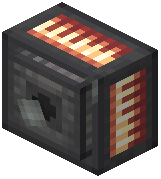 Alternator.
 - Connecting rapid rotational shafts to the alternator converts kinetic stress into substantial Forge Energy outputs.
- Conversely, supplying electrical power into an
 Electric Motor outputs adjustable rotational kinetic motion.
 - Electric motors allow engineers to drive remote mechanical factories without running hundreds of blocks of kinetic shafts.
- Fine-tuning motor scroll wheels regulates output rotation speed and rotational direction with digital precision.
- Balancing generator inputs with motor demands maintains equilibrium across interconnected kinetic-electric installations.
- Deploying clutch switches upstream allows technicians to halt generator inputs instantly during planned grid overhauls.
Storing Energy in Modular Accumulator Arrays
Buffering surplus electrical power against unexpected consumption spikes demands constructing modular battery banks.
- Stacking reinforced energy storage cells together builds an expandable Accumulator multi-block bank.
- Accumulators automatically share internal electrical charge across adjacent contiguous units without external cabling.
- Mounting a calibrated
 Digital Adapter to the accumulator displays accurate real-time energy capacity percentages.
 - Regulating outgoing circuit power is simplified by wiring an automated
 Redstone Relay switch to the battery array.
 - Transferring bulk power between moving train contraptions and stationary stations uses a
 Portable Energy Interface.
 - Massive accumulator banks absorb volatile energy spikes from renewable wind and water generator installations easily.
- Surrounding battery chambers with reinforced brickwork protects sensitive capacitor matrices from stray creeper blasts.
Wiring Grids with Connectors and Relays
Distributing stored electrical current across factory facilities requires mounting specialized ceramic wire connectors.
- Affixing low-voltage connection points onto walls is handled by placing a compact
 Small Connector.
 - Handling high-amperage industrial current between distant power substations requires mounting a
 Large Connector.
 - Linking connectors together with spools of drawn wire establishes overhead high-voltage power transmission lines.
- Insulated wires prevent electrical shock hazards when players walk beneath busy overhead factory utility lines.
- Mastering alternator conversion, accumulator storage, and connector wiring electrifies your world with limitless industrial power.
- Inspecting line sag between distant transmission towers ensures outdoor wire spans stay clear of tree branches.
 Capacitor